

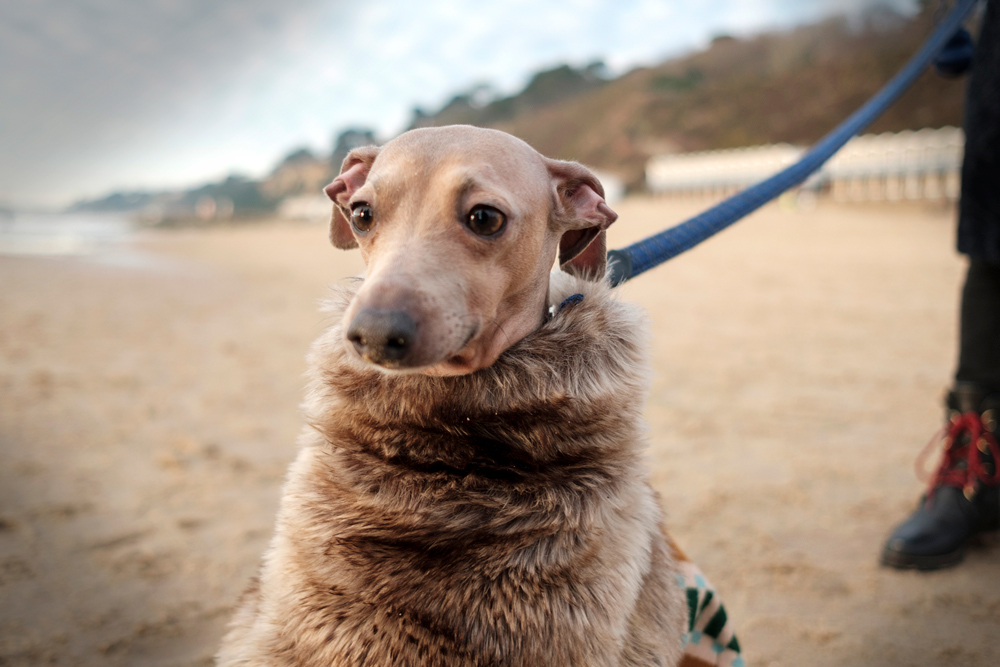
With the colder weather, it’s a good idea to let your dog’s fur grow longer.
This gives them a bit of added protection and for the short-haired breeds and puppies, let them wear a coat to keep them snug.
Your dog should be wearing a collar and ID tag and be microchipped – it’s important to ensure your personal details are up-to-date on the database.
Visibility – for both you and your dog during the cold dark months is important.
If it’s snowing keep your dog on a lead – there could be deep patches or holes, or the snow may cover areas that aren’t safe.
Wipe after walks – make sure you wipe your dog’s legs, feet and tummy after a walk.
Grit from the roads and dampness from rain or snow can irritate their skin and cause problems.
Don’t leave your dog in the car – whether it’s a hot or cold day outside, leaving your dog in a car is dangerous due to temperatures rising and falling rapidly.
Frozen ponds – don’t let you dog onto frozen ponds as the ice may not be thick enough to take their weight.
If your dog does fall through ice, don’t be tempted to go in after them.
Try encouraging them back to you and call the emergency services.
Antifreeze – this is highly toxic and poisonous to pets, but unfortunately they are tempted by the sweet smell/taste.
Keep antifreeze and other chemicals well out of reach and always mop up any spillages.
Regularly check your dog’s leads, collars and harnesses – check these are functioning safely and don’t get damaged by winter weather. Wet weather can cause metal clips to rust.
Always do up lead clips and carabiners and attach to collars/harnesses before leaving the house as they can be tricky to do up in the cold.





Leave a Reply