

by Faith Eckersall.
From greener asphalt to solar-powered hotboxes, Dorset Council has revealed the weird and wonderful ways it’s reducing its carbon footprint.
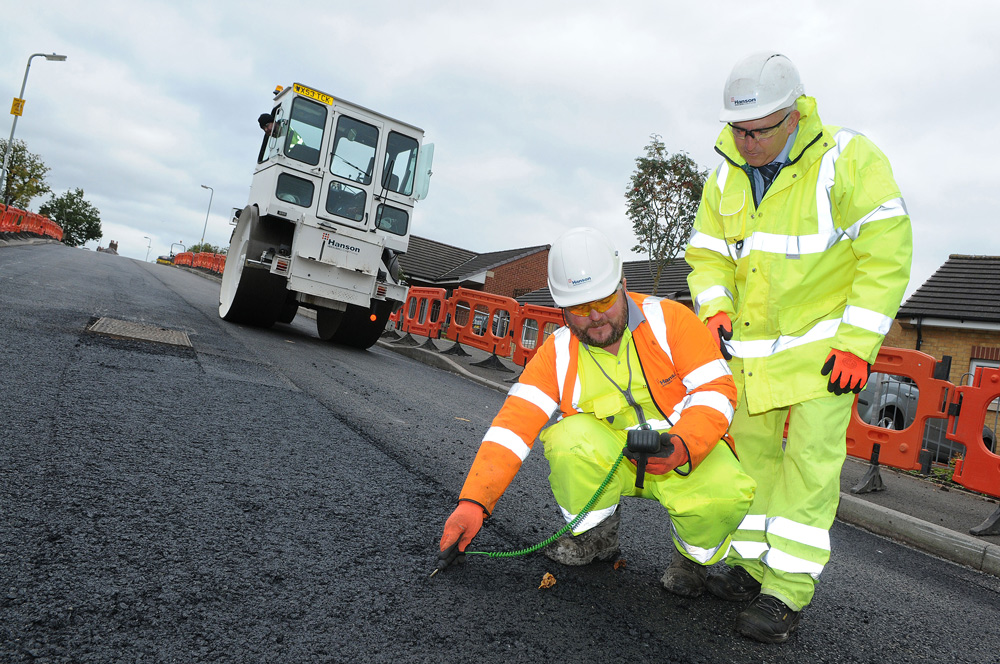
The council has cut the carbon emissions of laying asphalt – the black top covering on our roads – by 15 per cent, simply by helping pioneer the use of a special additive at manufacture.
A spokesman explained that previously, asphalt needed to be heated at a very high temperature to reach the right consistency for road-laying.
“Now we can lay it at a much lower temperature and use more in one visit,” he said.
“This enables faster completion of resurfacing works, minimising time on site for contractors and disruption for motorists and saves money by using less energy.”

Typically, conventional asphalt is produced at around 190C. Low energy asphalt is effective at 40C less, reducing carbon emissions by around 15 per cent.
The council is also repurposing old road surfacing – traditionally sold or re-used in maintenance projects – into new road surface, as part of its partnership with Corfe Mullen firm Allasso Recycling.
“Last year, we used over 14,000 tonnes of this sustainable surfacing, an increase of 8,000 tonnes on both the previous two years,” said the spokesman.
To further cut emissions, and costs, Dorset council has become the first in the UK to power the hotbox – which keeps asphalt at the right temperature – by solar power.
The 415-panel array is on the Charminster depot’s roof and is one of more than 100 Dorset Council solar panel projects benefitting from £19million of central government funding.
The council said: “When in use, it runs 24 hours a day, seven days a week using a maximum of four electric elements – not more energy than a kettle – and its purchase price was the same as a new gas-powered box.”
The renewable energy costs nothing to generate and is also used to charge the depot’s growing electric vehicle fleet and power tools, as well as help power its buildings.
Excess energy generated by the solar array is fed back into the National Grid although the council is now looking at battery storage options.







Leave a Reply